Sunday, November 24, 2013

WEEK 8: NANOTECHNOLOGY & ART

  First introduced by Richard Feynman during his talk "There's Plenty of Room at the Bottom," at an American Physical Society meeting, the concept of nanotechnology addressed the possibility of creating mechanics on an atomic scale. This took place at Caltech on December 29, 1959. Feynman suggested that building technology on such a small scale has limitless possibilities due to the amount of space provided, respectively.
Richard Feynman Photo

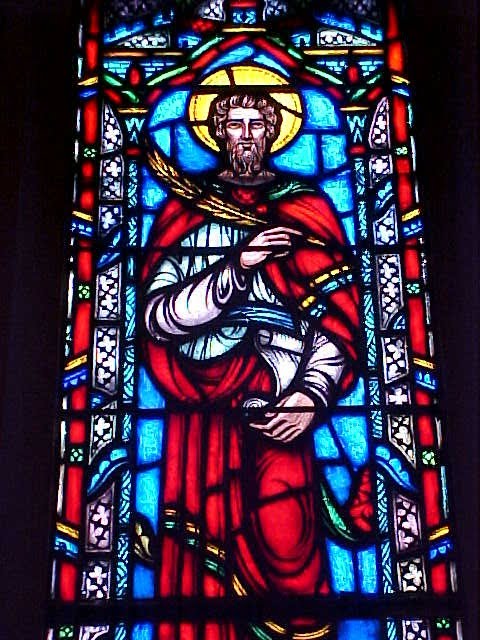
  In relation to the field of art, nanotechnology can be seen through the incorporation of minerals/metals within paints or sculpture to create unique effects. This is because on the nano scale, many materials behave differently. When incorporated into glass, gold and silver nano particles catch the light in different ways and make the light passing through a different color. To take this a step further with silver, if incorporated into glass cups, a darker liquid will cause the cup to glow a bluish hue and give the glass an opaque appearance. 
  Lotus leaves have the ability to reject water from seeping into the surface, a quality known as hydrophobia. This property which works as a water deterrent helps the leaves sit on top of the water as lily pads. Furthermore, companies have created nanotechnologies that also have this ability and have applied it to clothing. Clothing can go beyond water repellent to having ketchup slide clean of the surface too. Fashion possibilities extend far beyond keeping clothes clean.

Sources:

Admin. "Invest in Nanotechnology" Article. Investingreeenenergy.com. 21 Oct. 2011. Web. 24 Nov. 2013.

"The Science of Stained Glass" PowerPoint. University of Wisconsin-Madison. Materials Research Science and Engineering Center (MRSEC). NISE Network. Web. 24 Nov. 2013.

Uconlineprogram. "Nanotech Jim Pt3" Online Video Clip. Youtube. Youtube, 21 May. 2012. Web. 24 Nov. 2013.

"Nanotechnology" Blog. Nano--technology.blogspot.com. Web. 24 Nov. 2013.

"Richard Feynman (1918-1988)" Article. Atomicarchive.com. AJ Media and Software 1988-2013. Web. 24 Nov. 2013.

Sunday, November 17, 2013

Week 7: Neuroscience + Art

  The relationship between the body and the mind attracts great curiosity within modern culture. Everyone wishes to know how they may better their health and lifestyle through strengthening their understanding of how this partnership functions. The mind receives great attention because of the great amount of information there is to still learn. Magnetic Resonance Imaging, (MRI), serves as one tool that artists of today draw inspiration from due to the incredible imagery and colorful representation.


  Giovanni Frazzetto and Suzanne Anker's work titled Neuroculture states the importance of the brain's mechanics in relation to the personality of an individual. They continue to explain how it is due to these factors that the brain is the most important organ within the human body. This is contrary to historical belief within many religions that may address the heart as the centerpiece of personality because of its placement within the body and its role in maintaining life. This controversy influenced by the importance of an organ within the body seems to have a great impact on artistic work as artists attempt to depict this vitality in their own work. Greg Dunn finds inspiration in neurons, the cells of the brain.

  Through his use of the Asian sumi-e style of painting Dunn creates lively images of neuroscience artwork. This technique uses the calligraphic approach with ink and brush that allows for aesthetically pleasing, finite lines that encroach upon the paper. His works show the marvelous balance between science and art.

Fazzetto, Giovanni and Anker. "Neuroculture" Article. Science and Society. Macmillan Publishers Limited. 2009. Web. 17 Nov. 2013.

Uconlineprogram. "Neuroscience-pt1.mov" Online Video Clip. Youtube. Youtube, 17 May. 2012. Web. 17 Nov. 2013.

Sunday, November 10, 2013

WEEK 6: BIOTECHNOLOGY & ART

Artists continue to push the boundaries of what they produce and label as art. This desire to progress has led to incorporating living organisms into their work. Biotechnology allows scientists to learn how certain products affect the body on a cellular level and how they may apply this knowledge to improve life. Joe Davis was the first man to incorporate this practice with artistic pursuance. He defined this manipulation of life as a form of expression.

In a more literal representation, the incorporation of florescence within animals not known for glowing, allowed artists to label the product of scientific research as art. This was done by taking the gene from a jellyfish, that allows for its florescent properties, and inserting it into a fertilized rabbit egg cell. The gene enters the rabbit's DNA and is reproduced as the cell multiplies. This use of florescence is applicable for research purposes as the gene can be used as a tag to show when certain proteins are being active within an organism, respectively.

The labeling of life as art comes about, due to the reforming of the body's characteristics. There is a great appeal in a glowing household pet. The florescent rabbit works as a modern day version of Duchamp's ready-made's in that an artist recognizes the efforts of another individual and labels the product as art. Like the era of Duchamp, it is quite controversial today to call a living organism art.

Sources:
1. Duchamp, Marcel. "Fountain" Sculpture, Porcelain. 1917, replica 1964. Web. 10 Nov. 2013.
2. Alien Disclosure Group (UK) "Scientists Create Cloned Glow-in-the-dark Rabbits" Web. 10 Nov. 2013.
3.Essaidi, Jalila. "Joe Davis: The Mad Scientist of MIT?" Blog, Bioartlab. 21 Oct. 2012. Web. 10 Nov. 2013.
4. Vesna, Victoria. "5 bioart pt1 1280x720" Online video clip. YouTube. YouTube, 18 Sep. 2013. Web. 10 Nov. 2013.
5.Vesna, Victoria. "5 bioart pt2" Online video clip. YouTube. YouTube, 17 May. 2013. Web. 10 Nov. 2013.

Sunday, October 27, 2013

WEEK 4: MEDICINE + TECHNOLOGY + ART

  Preservation of the body and the desire to maintain a youthful appearance is a desire of people everywhere. This weeks lecture discussed the integration of art and medicine as a means of sustainment. Beauty is found in the youthful and to stay young means retaining physical attractiveness. Today we see this through the use of makeup, facial masks and lotions.


  In the past preservation of the body, after death, was vital so the diseased may have a tranquil afterlife. Mummification worked to a similar degree in retaining the body's beauty as well. The Egyptians mastered the process of mummification with respect to the medicinal approach but they also made sure that the diseased be accompanied by the worldly possessions that they would be using in the afterlife, and this took on the more artistic approach of arranging tombs for eternal preservation.


  Today we see the an extension of the preservation through plastic surgery or a facelift. Not so much preservation but enhancement, for those who want to make themselves feel more beautiful than before, they increase the size of their breasts, butts, calves, or lips.  People go to great lengths to reach their desired body type, even if it means multiple surgeries.


Sources:
http://library.thinkquest.org/C0116982/HTML%20page%20folder/hmummification.htm
http://abcnews.go.com/m/blogEntry?id=19843266&ref=https%3A%2F%2Fwww.google.com%2F
http://www.plasticsurgery.org
http://www.mylearning.org/a-step-by-step-guide-to-egyptian-mummification/p-1681/
http://www.alysarushton.com/gluten-free-self-care


Sunday, October 20, 2013

WEEK 3: ROBOTICS & ART


  The concept of creating robots with living characteristics, such as growth, reproduction, and self-sustainment is becoming ever more prevalent in science today. In Hod Lipson's TED Talk "Building 'Self-Aware' Robots," he suggests that scientists must stop designing more advanced technology and allow the technology to evolve on its own. This may seem a bold concept for the average person to wrap their head around considering most of todays electronics deteriorate over time but the ideas have been there for quite awhile. The line between mechanisms and organisms becomes narrower with time as films of today show robots that can disguise themselves as humans and heal damaged limbs. Terminator 3 portrays this perfectly.

http://www.youtube.com/watch?v=5CLIWyKuHiQ

  Technology today incorporates ideas of this nature through artificial intelligence, motion sensors, or automatic focus. Cameras have evolved tremendously over the last century let alone the past decade, so much that it has reshaped art. Whether it be for financial reasons or because the technology is at our disposal, todays art has been redefined by mechanics. Besides photography we see it in sculpture, no longer do artists need to labor away at a piece of marble when they may work with clay and later pour a medium of their choice into a cast. Video games also allow artists to fully express themselves with the convenient use of a computer. World of Warcraft leads the way in this field, creating the most aesthetically pleasing of today's games.

1920x1080 Video Games wallpaper
http://wallpoper.com/wallpaper/video-games-241462

  We use technology as a means to create more elaborate art and translate our ideas more thoroughly. Furthermore, inventors of today create machinery that is also art, or art with a purpose. Cars have been works of art since the first blueprints. Yes the vehicle must be safe when traveling from point A to point B but designers must also make a product that can sell and advertise itself. This allows the artistic faculties to unfold. Our cars define us and therefore we must find one that mirrors our image and fits a look we want to uphold. Technology moves forward is numerous ways.


http://parachoquescromados.wordpress.com/tag/eldorado/

Sources:
http://www.ted.com/talks/hod_lipson_builds_self_aware_robots.html
http://www.youtube.com/watch?v=5CLIWyKuHiQ
http://wallpoper.com/wallpaper/video-games-241462
http://parachoquescromados.wordpress.com/tag/eldorado/
http://www.bbc.co.uk/news/entertainment-arts-19576763

Sunday, October 13, 2013

WEEK 2: MATH + ART

Early art represented life through the use of two dimensions. This can most commonly be seen through the misunderstanding of the concept of perspective and the use of depth. Artists placed objects above and bellow one another to display what was further and closer to the viewer. As objects receded in space they moved higher up the canvas even though they stayed the same size as the objects closer to the artist. This can be seen easily in pre-renaissance art as presented below. Notice how objects move up the canvas as they move into the distance.
Untitled.png
http://leblanc.cmswiki.wikispaces.net/Renaissance+Art

With the coming of the Renaissance, perspective was discovered and applied with art that would show nature in all its beauty. Artists tried to glorify their surroundings through elaborate interpretations of animals and landscapes. This would incorporate the third dimension and objects grew smaller through space. Notice how the trees become smaller as they follow the bank into the distance.
Reflecting, acrylic painting by Mirja Vahala
http://www.mirjavahala.com/Landscapes%20Hor%20page%202.html

The introduction of the fourth dimension was realized with Albert Einstein's theory of relativity was proposed. This of course was the addition of time to length, width and height. This can be best understood through the reading of Linda D. Henderson's article on the relation of geometry within art. During the early 1900's in the time of Modern Art avant garde artists such as Picasso attempted to present the dimension of time by showing more than the appropriate number of sides of an object to suggest rotation or movement. The artist Delauney demonstrate this rotation well through his piece of the Eiffel Tower.

http://www.ruf.rice.edu/~fellows/hart206/cubism.htm

Works Cited
http://www.ruf.rice.edu/~fellows/hart206/cubism.htm
http://www.mirjavahala.com/Landscapes%20Hor%20page%202.html
http://leblanc.cmswiki.wikispaces.net/Renaissance+Art
http://www.metmuseum.org/toah/hd/cube/hd_cube.htm
http://www.jstor.org/discover/10.2307/1575193?uid=3739560&uid=2&uid=4&uid=3739256&sid=21102770821383

Sunday, October 6, 2013

WEEK 1: 2 CULTURES

  When I was in preschool I was exposed to many different fields of art and found great satisfaction in expressing myself through creation. In elementary school teachers still attempted to share enjoyable ways of interacting with arts and crafts while learning but it never seemed to be enough for me. My mom understood this and enrolled me in art classes outside of school so I may partake in deeper artistic learning.
  This is where I feel the distinction between my two cultures grew. As a young student in the classroom I made sure to learn about the information the teacher placed in front of me even though I was never too concerned with social studies or english. I always seemed to be drawing on my notes instead of recording important information. I still do this today. When my mom allowed me to take part in art classes that focused on drawing, painting and sculpting I found a greater sense of connection with that part of myself through creativity.
Liquid Jewels: High Speed Photos of Paint on Popped Balloons by Fabian Oefner  paint high speed color
http://www.thisiscolossal.com/2013/08/liquid-jewels-fabian-oefner/
  My two cultures were greatly separated after preschool during my years of elementary but they soon rejoined in middle school and high school because of the transition my mom made me go through by leaving public and joining a private institution.

http://bornstoryteller.files.wordpress.com/2011/07/private-schools.jpg
  I found that when my time in the classroom was restricted to only being allowed to participate in typical book learning I was a much less enthusiastic student than when I was in the studio testing my hand at painting or drawing. The third culture grew from the new environment my mom placed me in where my schedule was not overpowered by math, science and english but balanced with arts.
  By taking part in classes that satisfied my need to create I felt more capable of participating in the other classes throughout the day.
http://www.thestranger.com/binary/a151/feature-lead-magnum-500.jpg
  The teachers at my new school understood the importance of a balanced curriculum and how art and science affected one another.

Sources:
http://www.ted.com/talks/ken_robinson_says_schools_kill_creativity.html
http://xavierleadershipcenter.com/articles/how-many-uses-for-a-shoe/
http://www.thisiscolossal.com/2013/08/liquid-jewels-fabian-oefner/
http://bornstoryteller.files.wordpress.com/2011/07/private-schools.jpg
http://www.thestranger.com/binary/a151/feature-lead-magnum-500.jpg